One Tool to Rule Them All
 for Documentation, Presentations, Manuscripts and Outreach
Quarto is an open-source scientific and technical publishing system created by Posit. It helps researchers move from scattered workflows to a more integrated way of writing, documenting, presenting, and sharing their work.
This website is designed as a guided reference to our workshop that was first given at the 13th International Congress on Environmental Modelling and Software in 2026. You can follow it from top to bottom during a live session, or return to individual pages later when you need help with a specific output format.
Who We Are

Ben Black
Head of the group Data and Modelling Infrastructure for Living Labs
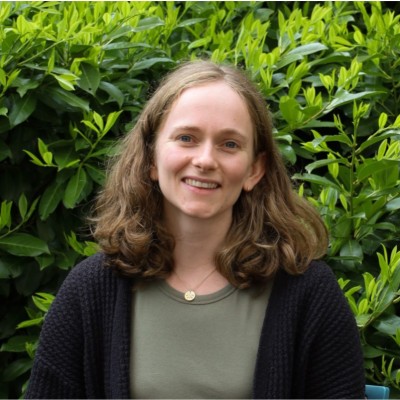
Isabel Nicholson-Thomas
Doctoral Researcher at Planning of Landscape and Urban Systems (PLUS)

Who This Workshop Is For
This material is especially useful for:
- Early career researchers building their first durable workflow
- Experienced researchers who want fewer disconnected tools
- Teams that care about reproducibility, transparency, and reuse
- Anyone who wants websites, manuscripts, presentations, and notes to feel part of the same system
Basic familiarity with at least one programming language such as R, Python, or Julia can help, but it is not required for most of the lessons here.
Why Quarto Matters For Researchers
In a nutshell, academic work usually produces and involves many related outputs:
We take rough notes and exploratory analysis in the early stages of research. These then evolve into polished text as well as figures and tables (which are often produced programmatically). We then combine these into manuscripts for publication, talks for conferences or sometimes reports and interactive communication for stakeholders or project partners. At the same time, there is an increasing need to share our work in other forms of public outreach and build our own online presence. Typically, many of these activities are done in using tools that are not necessarily integrated or compatible, which can lead to a fragmented workflow and a lot of time spent on manual formatting.
Quarto makes all of these activities easier to manage by allowing you to perform them in a single system. You can write your notes, code, and text in plain text files, and then render them into different formats (like HTML, PDF, DOCX, slides) without having to switch tools or worry about compatibility. This means you can focus more on the content of your research and less on the technicalities of formatting and tool management.
The core promise of Quarto is simple: write once in a plain text source file and render to multiple professional outputs such as HTML, PDF, DOCX, and slides.
How To Use This Site & What You Will Learn
We have broken down the workshop into six main sections (with an advanced section for those who want to go deeper). Each section has a separate page with a guided exercise to help you practice the workflow with an academic scenario. You don’t have to follow the sections in order, or indeed complete them all, but we recommend starting with the foundations if you are new to Quarto.
Make sure Quarto ≥ 1.5 is installed and that you can run quarto check in your terminal. If you hit issues, see the Installing Quarto page.