2 + 2[1] 4Quarto is an open-source publishing system developed by Posit. It is built for technical and scientific communication, which makes it especially useful for research settings where writing, analysis, and presentation often belong together.
Quarto is closely related to R Markdown, and many researchers meet it as the newer, broader continuation of ideas that became popular in the R Markdown ecosystem. The biggest shift is that Quarto was designed from the start as a multi-language, multi-format publishing system rather than as a tool mainly associated with R.
Research outputs rarely stay in one format. The same project may need:
Quarto supports all of these with a common syntax and shared project structure. That is the larger theme of this workshop: one authoring system, many academic uses.
Quarto uses readable plain text files with the .qmd extension. A binary format (such as .docx or .xlsx) is stored in a way only its own software can read, so you cannot see what actually changed between two versions of a file. Plain text can: every edit is a visible line that you can track, review, and roll back.

A single source file can render to many polished outputs: the same content, reshaped for each medium. Here is one short document rendered three different ways:
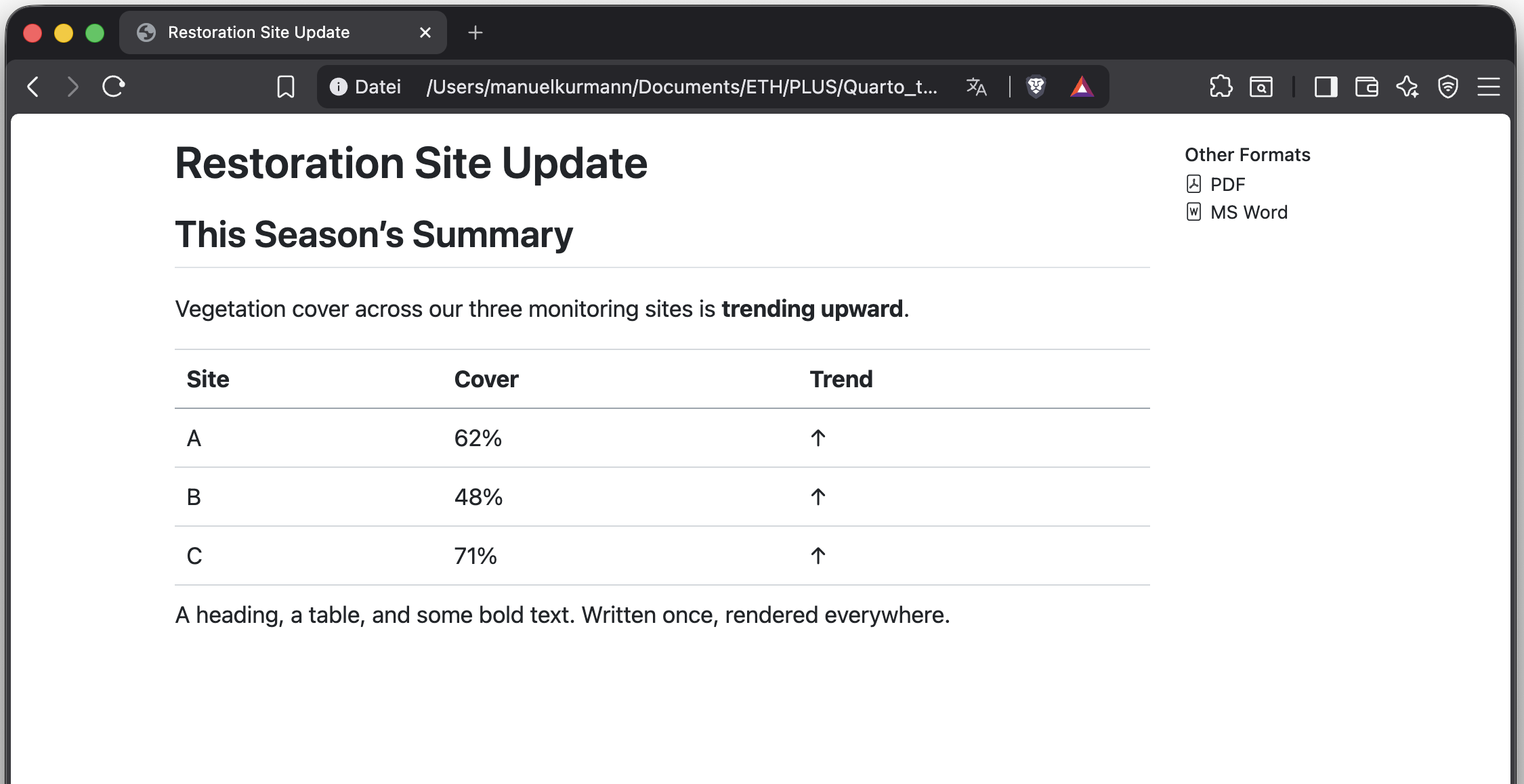
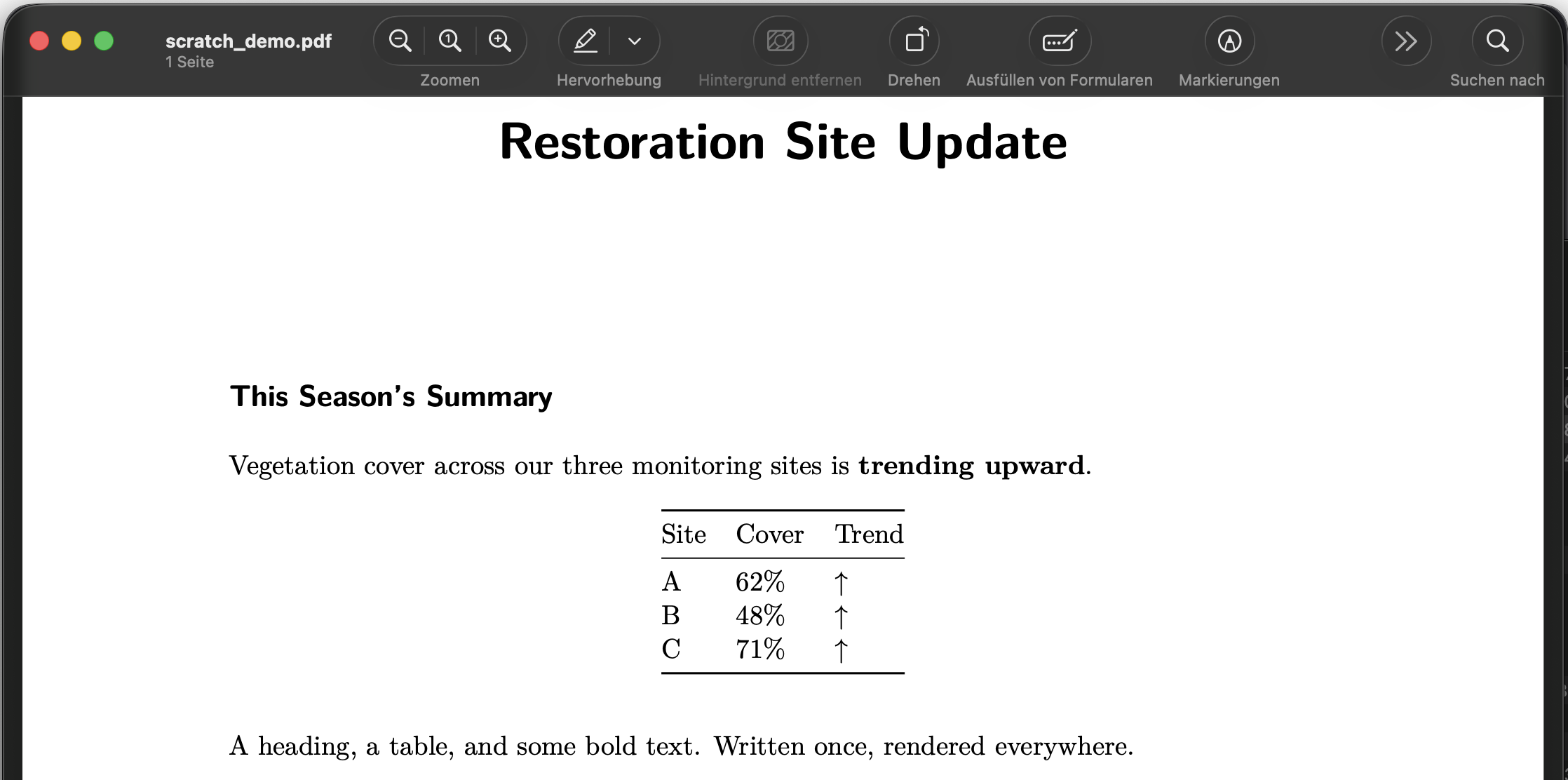
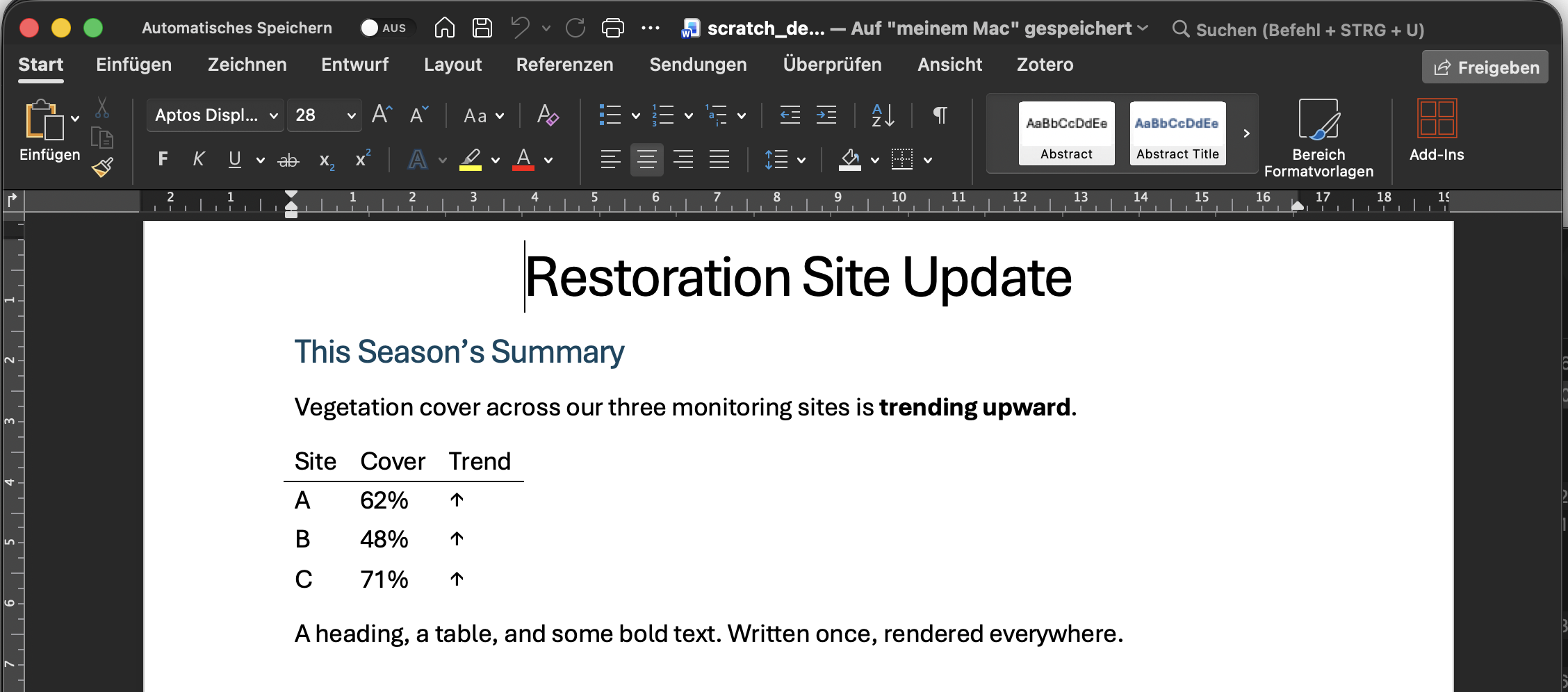
You write it once; Quarto handles the formatting for each. The same idea extends to slides, dashboards, and full websites, the outputs you will build in the rest of this workshop. In fact, the website you are reading right now was built with Quarto.
If you have used LaTeX, for example through Overleaf, Quarto will feel familiar: you write in a plain-text source and can produce PDFs with proper mathematical notation. The main difference is that Quarto uses Markdown, which is simpler than LaTeX markup, and renders the same source to other formats as well, such as HTML, Word, and slides, not only PDF. For PDF output Quarto relies on LaTeX internally, so you can still include raw LaTeX where you need it.
Quarto can run code inside the document, not just display it. The result below is computed when the page is rendered, not typed in by hand:
2 + 2[1] 4Quarto supports R, Python, Julia, and Observable JavaScript. Swap r for python or julia in the chunk header and the same idea works, so everyone can stay in the language they know.
Most Quarto files combine three ingredients:
Continue to Markdown for Beginners to learn the authoring syntax that most Quarto pages rely on.