Data and Modelling Infrastructure for Living Labs
Overview of our services
IAT Statusseminar · 24th September 2026
Hello everyone, so I have the pleasure of starting this afternoon session presenting the IAT service group that I am responsible for: 'Data and Modelling Infrastructure for Living Labs' or 'DML' for short.
For those of you who haven't met me yet, my name is Ben, my scientific background is in socio-environmental systems modelling, specifically in landscape level, scenario based modelling of land use and climate change and it's impacts on ecosystem services and biodiversity. But I also have experience in participatory modelling. More importantly, over my time in academia, I have become passionate about all things Open Science and also trying to make science more impactful by communicating our findings beyond academia.
Our mission as a service group
To support researchers in making their data, software and models
open, reproducible and connected
— and in communicating what they find so that it reaches
practice partners.
To summarise the mission of the DML service group, it is to To support researchers in making their data, software and models
open, reproducible and connected and to support both researchers and staff in communicating the findings of the IAT so that it reaches
practice partners.
To frame the different services that the DML team will provide we have
produced this concept that divides them up into three strata: Support, Transfer and Integration.
First click: support
Support refers to assisting researchers with managing their data and research software over all stages of their projects.
More specifically, this means aspects such as assisting with data management plans, good practices for software development,
data archiving and publication and promoting these skills through both direct consultation as well as training.
2nd click: Transfer
Transfer is services to help close the loop between science and practice.
Particularly assistance with digital communication approaches such as web-based dashboards
or data visualisations and story-telling. Ideally these outputs can be co-developed with
stakeholders and used to support co-design processes within the Living Labs.
3rd click: Integration
Integration is services to connect data and methods across groups in the IAT.
Helping to make methods and models more interoperable.
Creating shared infrastructures for data and as part of this developing
common standards and schemas.
To make each of these service areas clearer in the remainder of the presentation
I am going to talk through real examples that we have already assisted people with.
Of course, it goes without saying many service activities will span several of these stratum
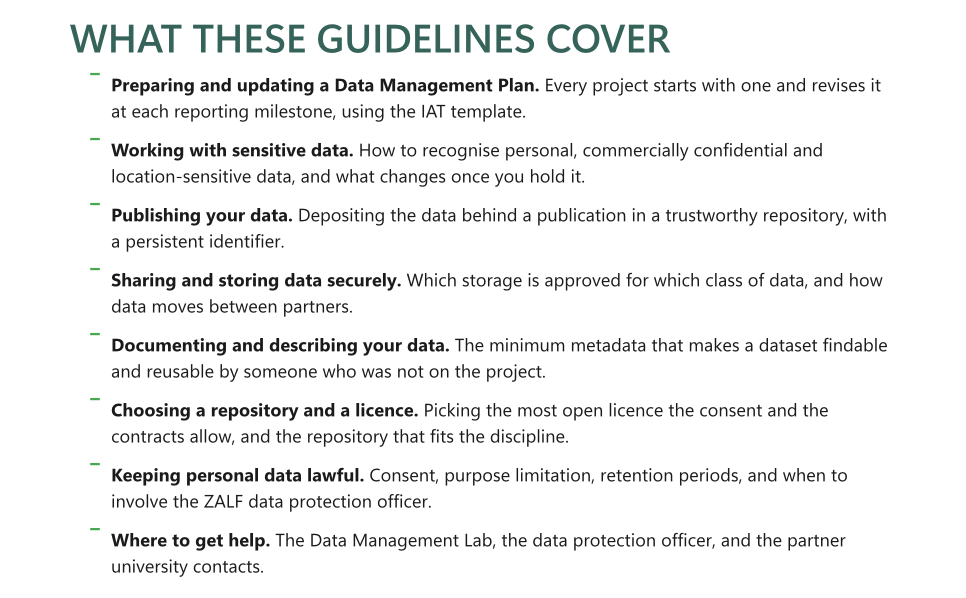
IAT Data Management and Protection handbook
Practical guidance for IAT researchers and staff to meet their obligations for
publishing research data, sharing data with partners
and dealing with personal data.
Developed with IAT partner universities , to complement the IAT Data Policy.
Firstly, we are developing an IAT Data Management and Protection handbook.
This will be a living document that will evolve with your feedback and the
aim is to provide practical guidance for IAT researchers and staff to meet
their obligations for publishing research data, sharing data with partners
and dealing with personal data. It is being developed with the IAT partner
universities, alongside an IAT Data Policy.
PB3 Data Catalogue
A lightweight, version-controlled
data management catalogue for the
research datasets of ZALF's
Agricultural Landscape Systems
research area.
github.com/iat-dml/PB3-data-catalogue
A very specific data management solution we have been working on specifically
with one of the research areas at ZALF is a lightweight solution,
low effort solution for cataloguing the datasets used by their researchers.
The central idea is to use simple formatted plain text files with pre-defined fields
to describe each dataset, these can be managed with version control, allow for anyone
to make contributions and for automated validation of the contents.
BirdNET-Passage
Research software built with
Marie Perennes for robust,
high-throughput AI classification of bird species from acoustic
sensor data.
github.com/iat-dml/birdnet-passage
Next I have an example of us assisting with a specific research software need.
This project came from, one of our researchers, Marie Perennes,
who was awarded funding as part of the IAT Flexfunding.
Marie, uses a large number of acoustic sensors placed on farm land to capture recordings of birds.
She was using a popular AI model called birdNET-analyser to identify species within these
recordings. The problem is the sheer volumne of data she is collecting made it very
difficult to process with the model on her desktop computer.
So what we did was developing a small software workflow, primarily with R because
this is the programming language that Marie and her collaborators are used to,
to efficiently process the audio files in parallel but importantly to keep records of the job status,
handle any errors smoothly and allow for simple resumption in the event of interruptions.
As part of this we added the capacity for this pipeline to be run on ZALF's
High Performance Computer cluster leading to a 100s of times speed up in the overall processing time for the data collections.
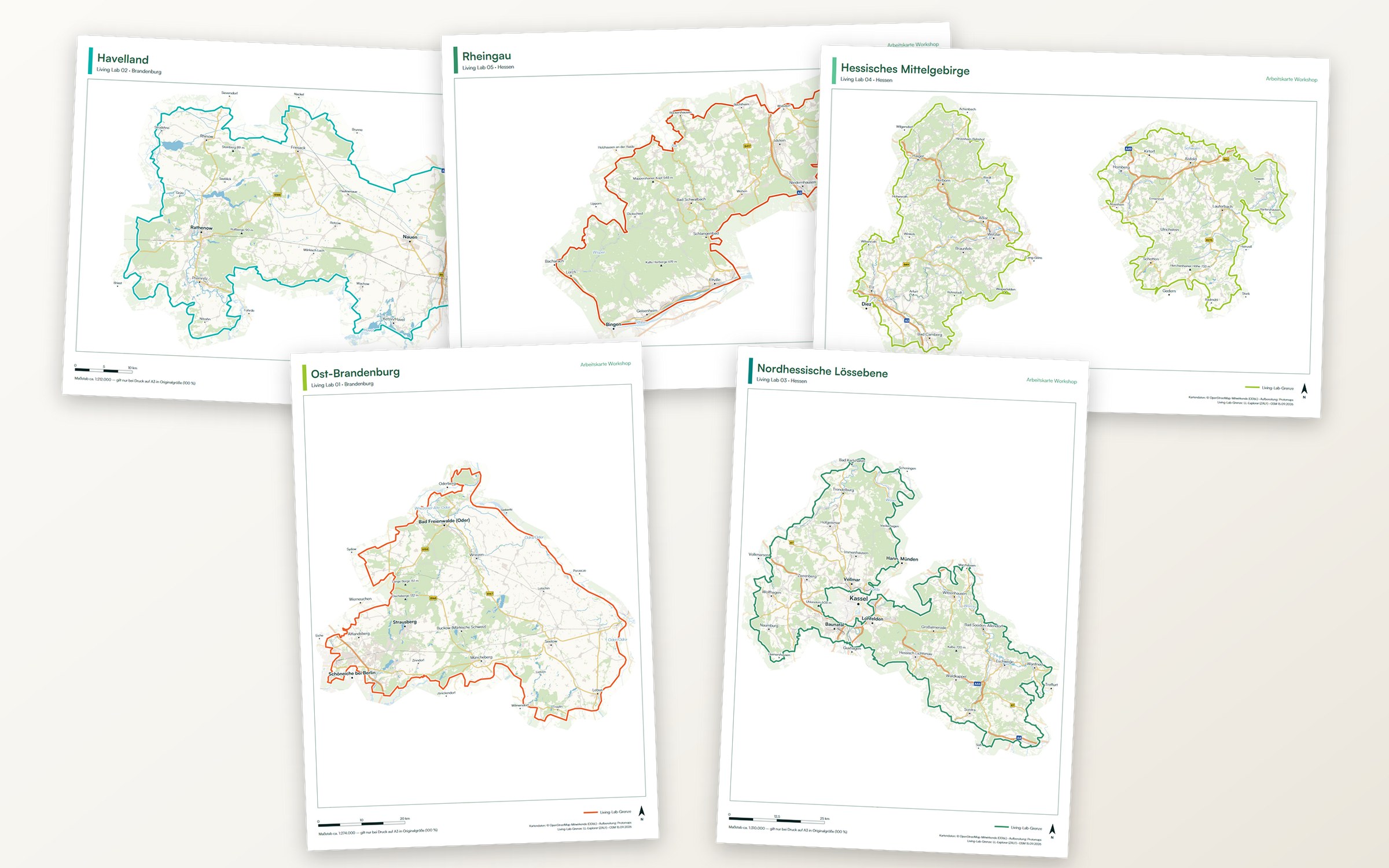
Living Labs Base Maps
These maps were produced as material for the Open Space session at
the IAT Statusseminar: Agroforestry as a
lever for transformation in the Living Labs .
github.com/iat-dml/living-labs-base-maps
This is a very simple service example but given that we have been collecting
a lot of background spatial data for our Living Lab dashboard that I will
discuss later, this means that we are well placed to produce
map-based visualisations for the purpose of workshops or events.
For example, we have produced a set of maps for our colleagues who are
leading one of the open space sessions this afternoon and we are starting
to make a collection of common ready-to-print maps.
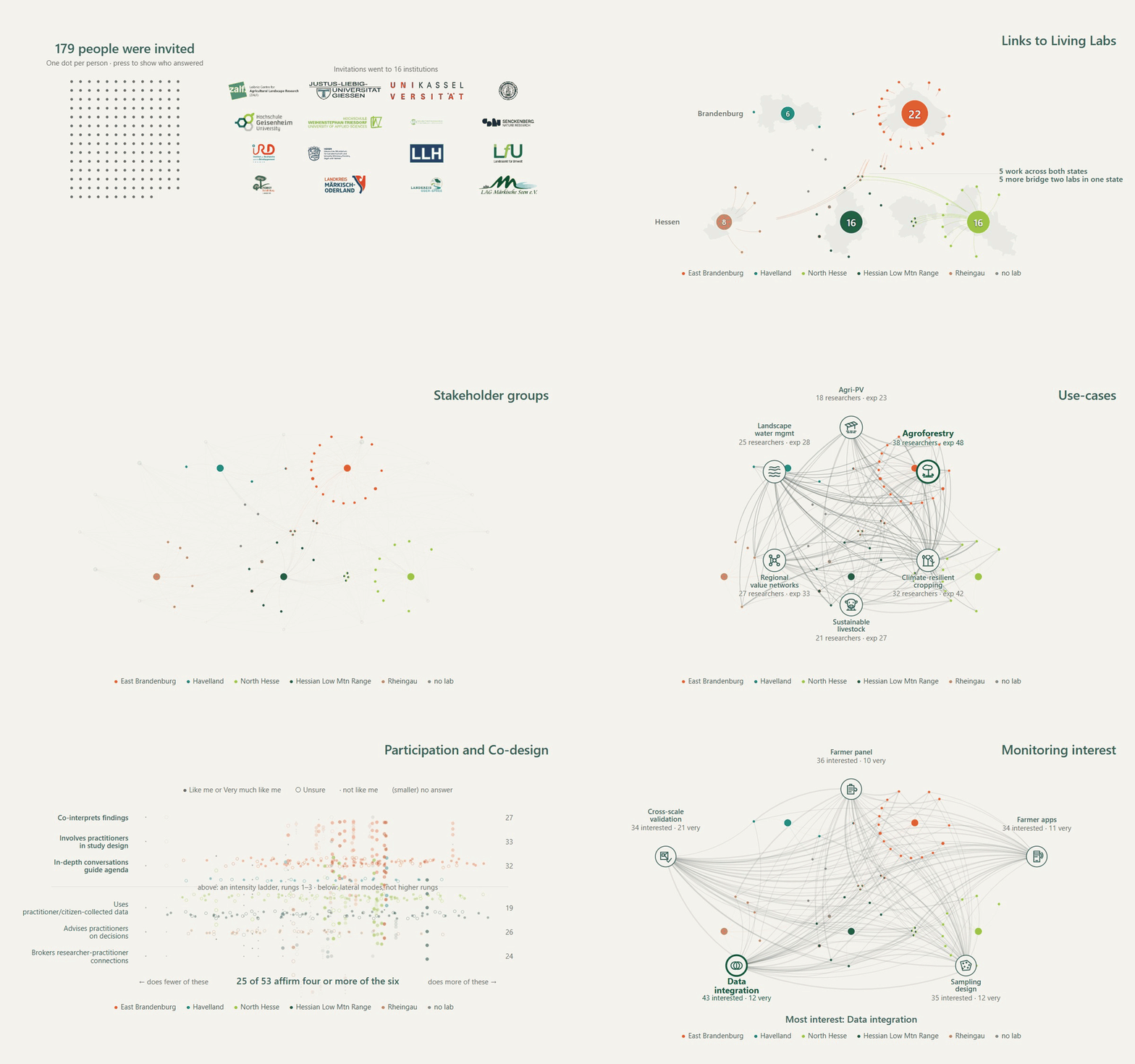
IAT Monitoring Survey Visualisation
Data visualisation that turns the IAT
monitoring survey into a story, with the
Social-ecological monitoring for living labs
group.
github.com/iat-dml/sem-survey-visualisation
At the other end of the spectrum of data visualisations this little gif shows a
much more complex bespoke data visualisation that we have produced to tell the
story of the reuslts of the recent survey that was sent out by our colleagues in
the Socio-ecological Monitoring group. Who will be presenting the results later this afternoon.
A hands-on workshop for
researchers : presentations,
dashboards, manuscripts and websites, all from the same source files.
iat-dml.github.io/quarto-workshop
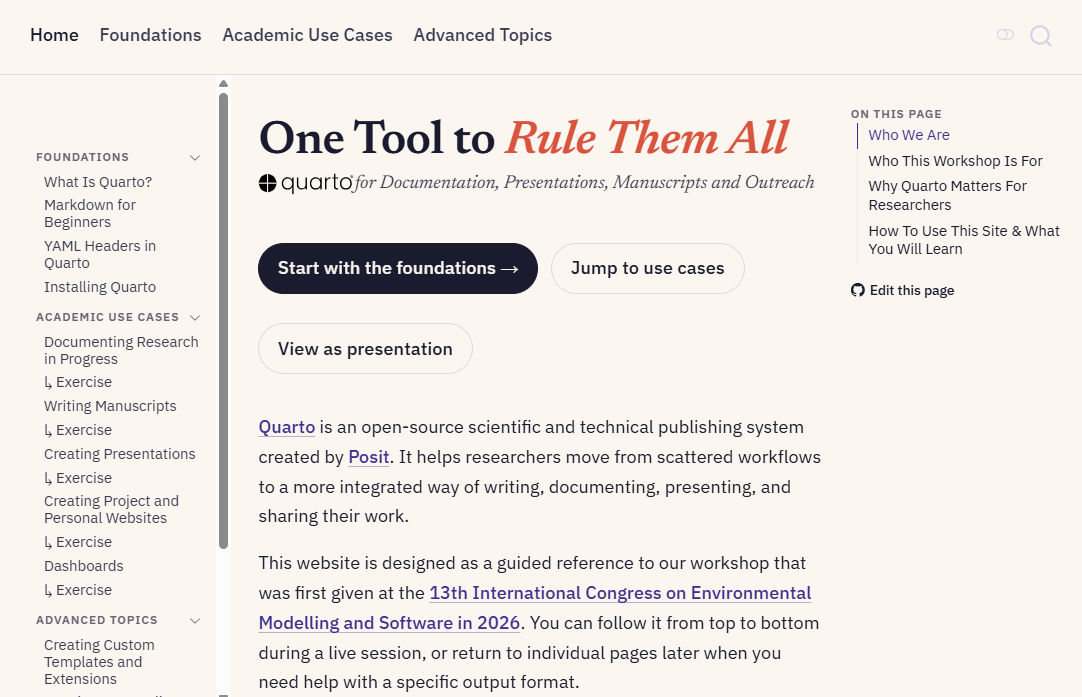
This next example is a project that we have been working in the area of reproducible
scientific publishing. It is a hands on workshop for researchers in the scientific
publishing software Quarto that can be used to meet all the typical publishing needs
including preparing journal articles, reports and presentations as well
building personal websites. If I were to recommend just one new tool that all academics
should use to make their lives easier it would be Quarto.
This workshop is available as a full online website and I will also be delivering it
again in person at ZALF in November.
Templates
Reproducible document formats for the
all IAT teams , built on
Open Source software: Typst, Quarto and Reveal.js.
github.com/iat-dml/templates
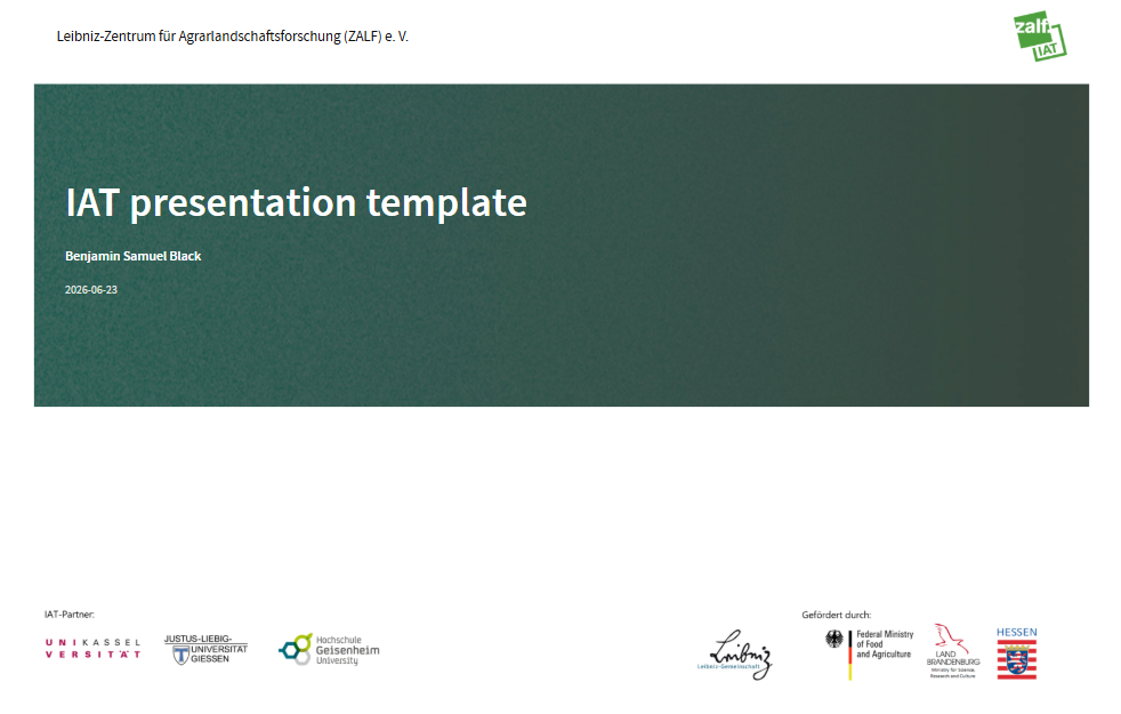
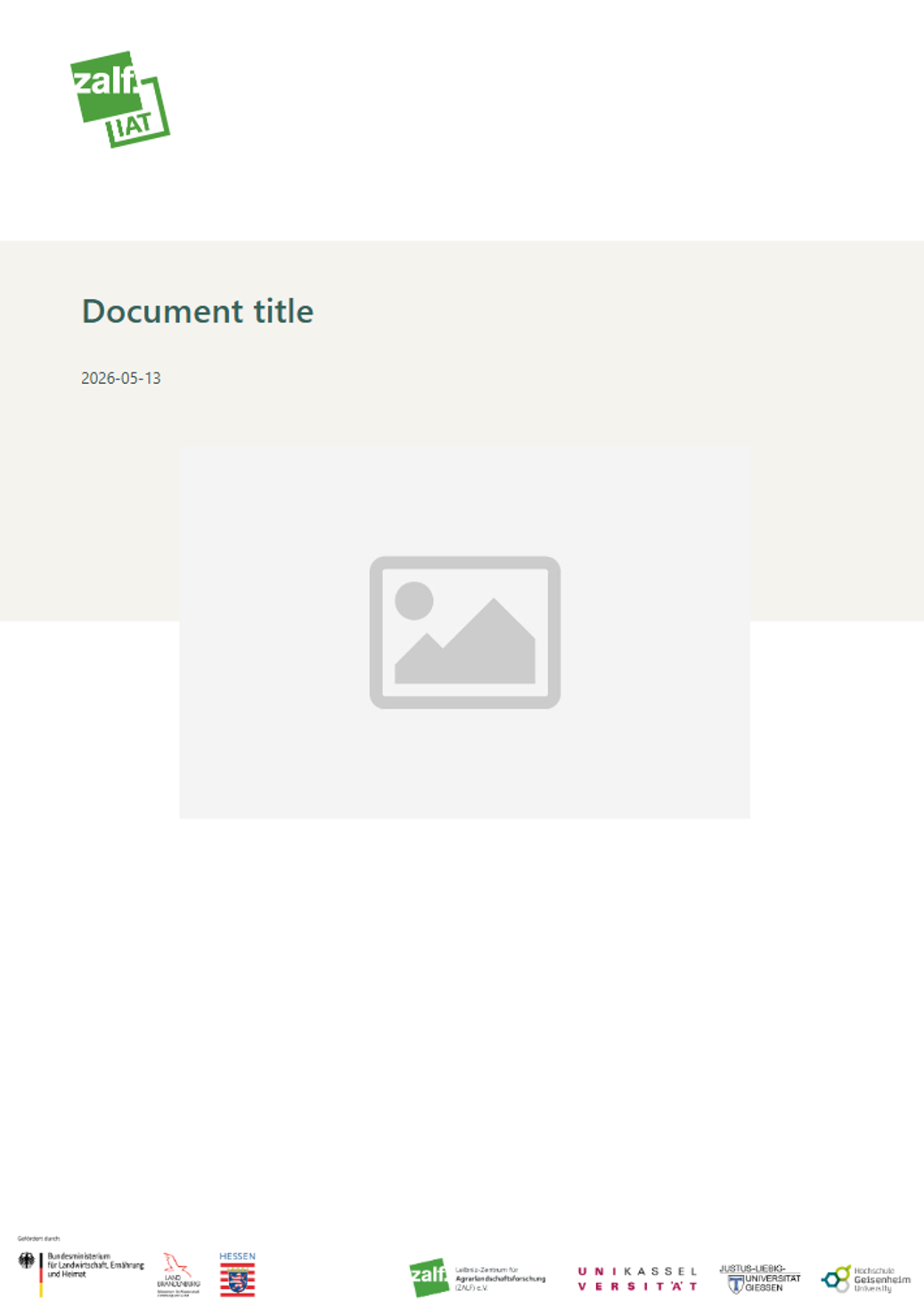
Related to this, I have been building up a collection of document templates for producing
IAT branded content like reports and presentations using Quarto and other open-source
publishing tools like Typst and Reveal. In fact this presentation today is made with one of these
DML Team Manual
A living account of how we work and the tools and techniques we use. A basis for how IAT groups can develop together as Open Science communities of practice
iat-dml.github.io/team-manual
Finally, I am big exponent of the idea that improving the accessibility,
re-useability and reproducibility of our research data and software should
not just be something we do as individuals rather we should aspire to
building communities of practice for Open Science within our research groups and the IAT more broadly.
For this reason, I have made the team manual for the DML service group available online.
This details exactly how we use open source tools and subvert useful approaches from
the world of software development to organise and optimise our work as well as
ensuring it's openness. The goal here is that anyone can adopt and learn from
these ways of working as well as contributing ideas of their onw.
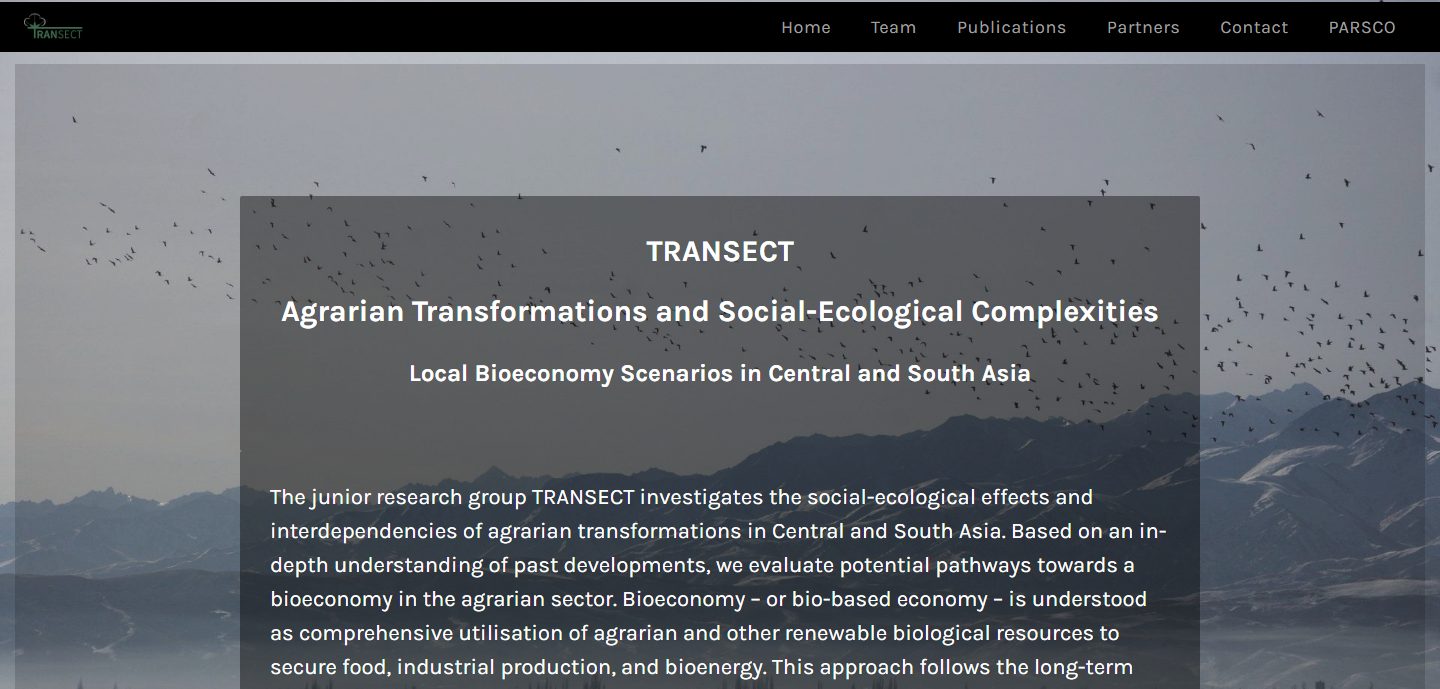
Project Websites
Accessible dissemination of research:
websites built and maintained with the
MonksHillLab initiative and the
Participatory resilience assessment group.
monkshilllab-isolab.github.io/LCSfFE-handbook
transect.de
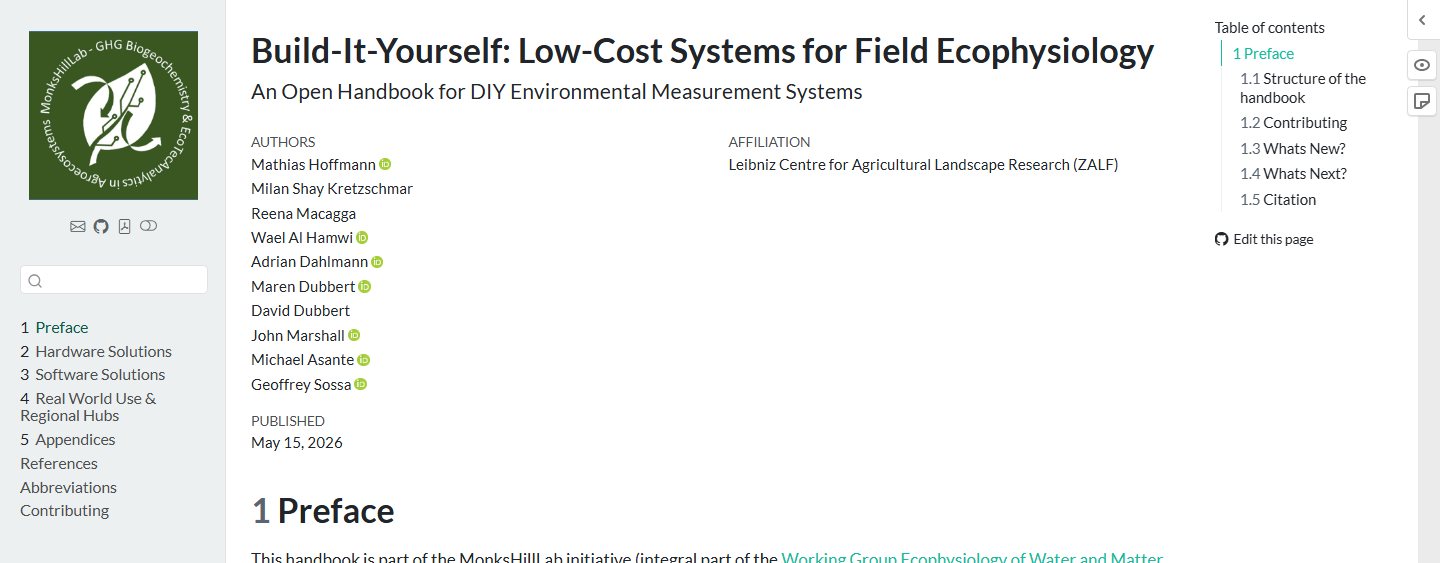
So the first example of services we have provided in this domain in
Living Lab Explorer
A dashboard built with the
Regional Network Managers to
co-design research planning around
socio-environmental data for the IAT Living Labs.
iat-dml.github.io/living-lab-explorer
TODO: notes for the Living Lab Explorer. The next slide plays the demo.
Living Lab Explorer demo. Grows out of the card, autoplays on entry,
pauses on exit.
IAT Project Tracker
A cross-group workflow keeping the
project lists of IAT coordination,
management and the service working groups in step with ZALF's
own project database.
github.com/iat-dml/iat-project-tracker
TODO: notes for the IAT Project Tracker.
IAT Data Management Plan Template
A Common standard for reporting
research data: a template and form-based entry and tracking system that makes every IAT
project's data management plan comparable.
TODO: notes for the IAT Data Management Plan Template.
A How-To Guide for Policy Labs
Interoperable methods written up with
Bettina Matzdorf, Sebastian Rogga and Joana
Iwaniw : a practical guide to building Policy Labs for
agri-environmental measures inside Living Labs.
github.com/iat-dml/policy-codesign-methods
TODO: notes for the Policy Labs guide. The next slide plays the tour.
Policy Labs guide, cut from the website tour. Grows out of the
card, autoplays on entry, pauses on exit.
Our website
Learn more about work and request support
TODO: notes for the website divider. The next slide plays the site tour.
Tour of the DML website. Autoplays on entry, pauses on exit.
Growing Our Team
Ben Black
Head of the working group
Coordinates the group, shapes shared infrastructure, and connects delivery across IAT and the CDP groups.
Data Steward
Planned position
Project-facing data management, metadata and curation, from DMPs through publication-ready datasets.
Expertise
RDM
Metadata
Data Curation
Research Software Engineer
Planned position
Builds reusable tools and workflows for scientific programming, automation and open-source practice.
TODO: notes for Growing Our Team. Data Steward applications open
October 2026; the RSE post follows in the first quarter of 2027.
Have your say
Help shape our services and ask any questions
Open the floor for questions and suggestions.